
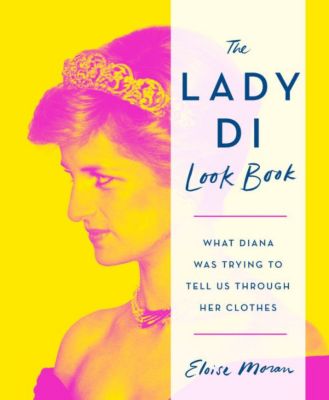
Barnes & NobleThe Lady Di Look Book: What Diana Was Trying to Tell Us Through Her Clothes by Eloise Moran
Product details
Web ID: 14717454Favorite Diana Book Yet!
I absolutely adored The Lady Di Look Book. Aside from the fabulous images and so many incredible looks I haven't seen before, I loved the unique angle Moran took in retelling the story of Princess Diana. I found it to be incredibly inspiring, and really conveyed why Diana remains so relevant to young women today. It exceeded all my expectations and I highly recommend!
Recommends this product
Customer review from barnesandnoble.com
Fabulous photos, questionable text
It’s common now to describe Diana as strong and powerful and determined, and eventually that became more true toward the end of her life, but that’s not how Diana described her own story. Literally, in her own words, she described herself as naive and trusting (like a fairytale princess). She trusted her husband and lover (Hewitt) not to betray her, but they both did; she trusted the royal family and palace machinery to watch out for her, but they only protected the heir; and finally, she trusted her playboy boyfriend to protect and care for her and he failed catastrophically. So it’s jarring to read things like, “Diana wrote the book on manipulating the men in her life…” She was not a master manipulator. Her attempts to manipulate Charles into abandoning Camilla or Hasnat into marrying her didn’t work. She was not a tough, take-no-prisoners, self-confident badass. She was an empathetic, trusting, self-doubting woman who suffered in silence until she couldn’t take it any more and finally broke away. This “warrior princess” description might be appealing to a modern audience but it’s not accurate and it’s not how Diana described herself. I also found it unpleasant to keep reading revenge, revenge, revenge, and f*** you, f*** you, f*** you. There’s an old expression, “When you set out on a journey of revenge, first dig two graves.” Diana herself eventually gave up on trying to get revenge on Charles. Revenge isn’t “transportive,” as the book says; it’s destructive, and it’s not “critical to healing.” The desire for revenge impedes healing because it nurtures anger. The author’s theme of resentment and revenge comes through very questionably at times. There’s a photo of Diana standing near Charles, whose broken arm is in a cast after a polo accident. “One simply can’t help but wonder if she wishes she’d put him in that cast herself!” the text says. I don’t think joking about a woman injuring her husband is any funnier than joking about a man injuring his wife. As far as “what Diana was trying to tell us through her clothes,” the focus is all on her personal life. (It does briefly cover the suits, briefcases, and plain clothing she chose in her final year.) I think someone should write a book about the sartorial choices Diana made specifically for her official appearances, especially abroad. I’m thinking of the red polka-dot dress she wore in Japan, the yellow-and-black coat she wore in Germany, the falcon-embroidered gown she wore in Saudi Arabia, or the Chanel she wore in France. Those choices illustrate the care Diana took in her messaging. None of that is in this book. To summarize, this is a book with flippant text and a lot of photos of a beautiful and memorable woman. If you’re interested in Diana’s wardrobe choices, I recommend “Dressing Diana” by Tim Graham. It’s full of gorgeous photos without the angry text.
Customer review from barnesandnoble.com
Love this book!
It’s very descriptive of every single detail of each photo. I’m happy with this purchase and will treasure it forever.
Customer review from barnesandnoble.com